The Design Academy Upload.

Just click here for Films.

Sunday, 6 October 2013

Immediate Change.

The Irish Senate remained part of the constitution at 4.20pm on 5-10-2013 with the 60 members of this upper government chamber.
As the national returning officer Riona Ni Fhlanghaile relays the constitutional verdict to continue as democratic governance. Some 51.8 per cent of the electorate has rejected the proposition to Abolish the Upper House with 48.2 per cent voting in favor. 'The people decided Seanad Éireann should be retained , Edna Kenny the prime minister said 'naturally I was personally disappointed but I fully respect and accept the outcome.' Sometimes in politics you get a wallop in the electoral process, I accept the verdict of the people. 'The Taoiseach said it was too early to say what the Government might do in respect of Seanad reform. But that he would consider putting it to the Constitution Convention. He said he had seen a range of proposals. but that these would likely 'require another referendum'. said a process of change in politics will continue and 'it's important to assess how best the Senate can contribute to that process of reform'
The coalition labor leader Mr Gilmore said a distinction would have to be made if the Seanad could be reformed in the existing constitutional framework or if a constitutional change was needed. He said the Constitutional Convention would be an option for considering. This would be how to proceed with the Seanad but that the matter would also be considered in the Upper House by the Dail and by the public.
Mr Gilmore said the Seanad referendum 'would not be put to the public again' as was the case following the rejection of the Nice and Lisbon treaties.
As it's not the same as some complicated European Treaty which requires a lot of explanation and examination, he said. "This was a straight Yes or No, are we going to have one parliamentary chamber or two." Seanad colleagues, Fine Gael's Catherine Noone and Eamonn Coghlan, are also said to be in the running for mitchell's seat with Fine Gael TD Peter Mathews and Dublin's Lord Mayor Naoise Ó Muirí also in contention. As a result of Croatia's accession to the EU, the number of MEPs representing Ireland in the European Parliament will be reduced from 12 to 11 next year requiring a redrawing of Ireland's European constituency boundaries. It is not yet clear what effect this will have on Mitchell's Dublin constituency as it is currently constituted.

Thursday, 6 June 2013

City Heracleion.

The Greek historian Herodotus, who told of Helen of Troy visiting Heracleion with her lover from Paris before the Trojan war. 
No evidence of the city was found until 2000 when French researcher Franck Goddio discovered it with a team from the European Institute for Underwater Archaeology.  This  sunken city gives up its treasure: Ancient Egyptian metropolis lost for 1,200 years below Mediterranean sea set to go on display. Heracleion was submerged by the sea and sands 1,200 years ago. As it was only discovered during a survey at the beginning of the last decade. 
Archaeologists are now preparing to show some of the objects found. An ancient Egyptian city swallowed by the sea more than 1,200 years ago has started to reveal its secrets. Items including 16ft sculptures, gold coins and giant tablets. 
These are among some of the objects recovered from the ancient port city which lies 20 miles northeast of Alexandria in the Mediterranean. For hundreds of years it was believed to be a legend, but the city of Heracleion, also called Thonis, was found during a survey of the Egyptian shore at the beginning of the last decade. A colossal statue of an ancient unknown Pharaoh (left) lies on a barge in an Alexandrian naval base after it was uncovered in the ancient submerged city of Heracleion. French marine archaeologist Frank Goddio (right) explains text on the stile of Heracleion.
As a team led by Franck Goddio and divers from his team inspect the statue of a pharaoh. 
Among the most important monuments that were discovered at the temple area of Thonis-Heracleion. is this monolithic chapel dating to the Ptolemaic period. Now, an international team of marine archaeologists is preparing to show some of the objects found in the underwater city. The city was mentioned by.The paper has said weights from Athens have also been discovered at the site, confirming beliefs the city was once an important trading port. 
Elsbeth van der Wilt, a University of Oxford archaeologist working at the site, told the paper the port was an important hub in the network for long-distance trade in the Eastern Mediterranean. 
As she said 'Excavations in the harbour basins yielded an interesting group of lead weights, likely to have been used by both temple officials and merchants in the payment of taxes and the purchasing of goods. An archaeologist measures the feet of a colossal red granite statue at the site of Heracleion discovered in Aboukir Bay. The statue of the Goddess Isis sits on display on a barge in an Alexandrian naval base (left). Pictured right is a colossal statue of red granite representing the god Hapi, which decorated the temple of Heracleion.
Heracleion was mentioned by the Greek historian Herodotus, who told of Helen of Troy visiting the city with her lover Paris before the Trojan war. 
'Amongst these are an important group of Athenian weights. They are a significant archaeological find because it is the first time that weights like these have been identified during excavations in Egypt. ‘While scientists are still unsure why the city suddenly disappeared, one theory suggests a rise in sea level and unstable collapsing sediment combined to submerge the city. 
Dr Damian Robinson, director of the Oxford Centre for Maritime Archaeology at the University of Oxford, who worked on the excavation, told True History  'It is a major city we are excavating. ‘The site has amazing preservation. We are now starting to look at some of the more interesting areas within it to try to understand life there.
'The ancient port city lies 20 miles northeast of Alexandria in the Mediterranean Items including 16ft sculptures, gold coins and giant tablets are among some of the objects recovered from the ancient port city. One theory suggests a rise in sea level and unstable collapsing sediment combined to submerge the city. Also as lost submerged cities attract large amounts of tourist these are set to become tourist underwater attractions.

Friday, 15 March 2013

Agreed War 1

As world war one was supposed to be over within a few days, England remained confident with all the mechanised equipment from the Boer War in Africa 1899-1902 and with the spoils of Germany on the table even her territories would be handed to Allied Forces in days might agility Russian Forces. In 1914 it was a war nobody would pull free from as Russia went into a single party totalitarian state. Russia had Germany on the run as her Navy captured at first section of the Whelm naval fleet put under Nicolas Tsar.
As Russian ground force of near million equipped troops outside Berlin it left Germany and Whelm in a dilemma, so train warfare begins to train time tables. 'Russia then reported a almost certain truce' as its solders outside Berlin many with cameras as only paintings 'survive today'. Germany pulled out their most feared weapon that 'being mustered gas'. The war turned into a modern explosive chemical warfare. So long war begins by leaving one million trained Russian troops dead in hours outside Berlin as Oder beset Berlin 1914.
As the mood in Russia was calling for surrender due to chaos in conscription lines that couldn't be supplied, German exercised its control of the rail network using the Schlieffen Plan pulled out the biggest weapon called big Bertha mobile cannon. As no food production pulled diseased over Moscow leaving a Russian state in bitter chaos. As Lennon stepped in, promising a treaty with new friend Whelm. 
Alaska Ceremony for transfer took place in Stika in October 18, 1867.
 With both Russian and American Soldiers paraded in front of the Governor's House. The Russian flag was lowered and the American flag was raised amid sounds artillery. The purchase price was set 7.2 Million Dollars, about 2 cent per acre. ($4.74 Km Sq)  From then It would always seen as the back door into Russia or as a meeting point for equipment.
World war one began with by a chain of events in Serbia this sets off a uncontrolled reactions as Austria attacks Serbia, pulling in Russia against Austria. The picture below is of Turkish Gallipoli Trench with a German Commander.
This pulled in Germany against Russia. As her Allie France little to fear pulled in against Germany which attacks France through Belgium so as Germany can guard her valued coal mines, this pulls in England  boasting few day win– starting World War One (In Aug. 1914) But the war on the Western Front ‘stalemates’ in northern France just north of Paris as it got a bypass agreement and into Western Belgium, forcing enemies to dig into unmovable positions – which are shelled and bombed mercilessly resulting in a massive loss of life mainly for the Allies; the misery endures, year after year trench warfare with long lines of impenetrable defences healed strong by powerful machine guns round casings almost no mechanism.Constantinople launched three successive attempts to forge an alliance with London (1908, 1911 and 1913) but each failed. For Britain, the strategic advantages of an Ottoman alliance were far outweighed by the risk. As England conscripted most of its forces from Ireland, It was clear that most of these men would never return from Gallipoli in Turkey.
In 1916 Ireland looked for its independence, it was something that popular opinion wanted. Just to be a ‘freestate’away from the British Parliament, known as the 'House Of Commons'. on 6-12-1921 treaty was signed as a 'Once only Offer'. Indeed it cost a large section of the Irish Population dilemma of uncertainty. As Ireland was still ‘under the viceroy governance’. As previous paid solders returned from world world war one.
On the 7-Jan-1922 The treaty had narrowly passed by 64 votes to 57 in the dail' It led Ireland into a bloody civil war under the 'Pro-Treaty' actions of the army. Pressure applied on 22-June 1922 over assassination Sir Henry Wilson in London. Pro-Treaty transitional forces fired there cannon's at random on 'Anti Treaty Protesters' in the 'high court' from the 14-Apr-1922.' On 28-6-1922' the final ultimatum ended in the Battle-of-Dublin. With no law or order this lead the 'Irish parliament by delema'.
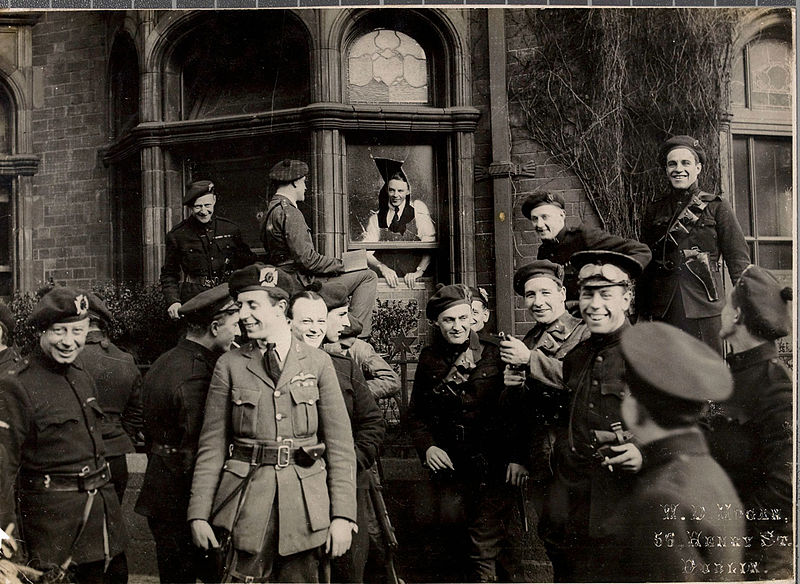
As there was no comprehension to the future, the Irish parliament was given an ultimatum by 'Churchill to Govern'. The civil war continued until the truce was formed with the removal of the 'Oath of allegiance' from the 'Irish Constitution'. The Irish civil war was from 28-6-1922 to the 24-5-1923 this left Ireland in a ruined state as Ireland becomes known as a republic. William Thomas Cosgrave in 6-12-1922 becomes 'Ireland's President'. The north remained under 'Union of Britain'. being part of the house of commons picture of the tans in April 1921, auxiliary burnt cork in December 1920
On the Eastern Front the battle is more mobile, with battle lines moving back and forth – but also with a massive loss of life.  Russia suffers the most, putting most of her farmers and labourers on the front lines, resulting in a lack of food, clothing and military supplies. Intense war weariness collapses the Russian Tsarist government ('February' 1917), which is replaced by Kerensky's Constitutional Democracy, which nonetheless continues in the war, bringing about a second ('October') revolution which brings Lenin and the Bolsheviks to power and plunges Russia into a long and bloody civil war (1917-1921) near five years of civil war in which the Bolsheviks win a devastated Russia aided by Whelm Kaiser. 
Seeing Russia with a new ‘democratic’ government, US President Wilson is ready to bring America into the War (April 1917) in order to make the ‘Great War’ a ‘Crusade for Democracy.’The Germans attempt a last massive push for Paris before the Americans can arrive in great numbers – but fail to reach their objective and find themselves exhausted.  When large numbers of American troops arrive in the spring of 1918 the Germans fall back in retreat. Wilson gets an ‘armistice’ (truce), ending the Great War (November 1918) – with no true winners, only vengeful and exhausted losers (though the British + French believe themselves somehow to be the ‘winners’). Photos Imperial War Museum.
Foot note In the final analysis it has been found that Churchill had said to Irish pro treaty delegation lead by Collins, that the Great War had finished. This meant the British Army could declare an all out war agents them, on every man woman and child. North Ireland could join at a later date. Churchill put the question that any further agreements could only be achieved on 'bended  knee' the cabinet would have either been shot or killed fighting as independence force agents, the now ruling British force? Michael Collins signed the pro treaty as the British Army were under pension obligations Irish solders conscripted by the grate war. Then there was another pressure to 'hold Irish State'? This same sort of pressure that came before out brake of the 'Irish Civil War', this is when Britain took a persuasive hand in the army affairs. This only ended after the conflict ended, this was with an agreement on rule. Royal Irish Constabulary became obsolete as the revolver Webley, Metropolitan Police functioned. Constabulary Records This was unseen contributor that lead the most viciousness within 'Irish Civil War' as many fell victim, an expense. Then came a transition with the Garda. Eamon De Valera took the position as leader of Finna Fail. The Irish Free State formed. It is easy to see how events moved, as structures formed.

Evolution To Threats.

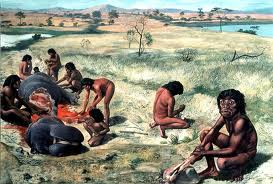
About 300,000 years ago, Neanderthals are believed to have split from the ancestral human lineage. It was not until more than 100,000 years later that anatomically modern humans appear in the fossil record. The latest theory claims the humble rabbit helped kill off the Neanderthals. Experts have long thought that the demise of the Neanderthal was down to food. 
Now a new theory claims that it was their inability to adapt to hunting small animals, such as rabbits,that was the final nail in their coffin, as the population of larger animals hunted for food dwindled. Hammer cautions against popular concepts of 'Mitochondrial Eve' or 'Y chromosome Adam' that suggest all of humankind descended from exactly one pair of humans that lived at a certain point in human evolution. 'There has been too much emphasis on this in the past,' he said. 'It is a misconception that the genealogy of a single genetic region reflects population divergence. 
Instead, our results suggest that there are pockets of genetically isolated communities that together preserve a great deal of human diversity. 'Still, Hammer said: 'It is likely that other divergent lineages will be found, whether in Africa or among African Americans in the U.S. and that some of these may further increase the age of the Y chromosome tree. 'There has been a lot of hype with people trying to trace their Y chromosome to different tribes, but this individual from South Carolina can say he did it.' When none of the genetic markers used to assign lineages to known Y chromosome groupings was found, the DNA sample was sent to Family Tree DNA for sequencing. Fernando Mendez, a postdoctoral researcher in Hammer's lab, led the effort to analyse the DNA sequence, which included more than 240,000 base pairs of the Y chromosome. The Y chromosome is larger defines the male social parameter as X chromosome (left) and the much smaller Y chromosome determines male sex as there needs to be much more studies besides procreation, children in matriarchal or patriarchal circles.
Proves last common Y chromosome ancestor lived 338,000 years ago, even though oldest fossil of modern man is only 200,000 years old. As DNA test on an American hoping to trace his family tree has come up with a stunning result - the roots of the human tree date back much further than previously thought. 
Researchers were shocked when they analysed the DNA of Albert Perry, a recently deceased African-American from South Carolina.'This lineage diverged from previously known Y chromosomes about 338,000 years ago, a time when anatomically modern humans had not yet evolved,' said Michael Hammer of the University of Arizona. The team found a similar chromosome in the Mbo, a population living in a tiny area of western Cameroon in sub-Saharan Africa Hammer said. 
'The most striking feature of this research is that a consumer genetic testing company identified a lineage that didn't fit anywhere on the existing Y chromosome tree, even though the tree had been constructed based on perhaps a half-million individuals or more.  'Nobody expected to find anything like this.' About 300,000 years ago Neanderthals are believed to have split from the ancestral human lineage. It was not until more than 100,000 years later that anatomically modern humans appear in the fossil record. They differ from the more archaic forms by a more lightly built skeleton, a smaller face tucked under a high forehead, the absence of a cranial ridge and smaller chins. Hammer said the newly discovered Y chromosome variation is extremely rare.  Through large database searches, his team eventually was able to find a similar chromosome in the Mbo, a population living in a tiny area of western Cameroon in sub-Saharan Africa.  'This was surprising because previously the most diverged branches of the Y chromosome were found in traditional hunter-gatherer populations such as Pygmies and the click-speaking KhoeSan, who are considered to be the most diverged human populations living today 'Instead.
DNA traced Homo Sapien there gene as Humans as we know may have evolved in Mbo this is an area where a population are living, its in a tiny area of western Cameroon so, is this what killed the Neanderthals? Researchers believe an inability to hunt small animals like rabbits led to their demise. The sample matched the Y chromosome DNA of 11 men, who all came from a very small region of western Cameroon,' Hammer said.  the sequences of those individuals are variable, so it's not like they all descended from the same grandfather.
'Unlike the other human chromosomes, the majority of the Y chromosome does not exchange genetic material with other chromosomes, which makes it simpler to trace ancestral relationships among contemporary lineages. If two Y chromosomes carry the same mutation, it is because they share a common paternal ancestor at some point in the past. The more mutations that differ between two Y chromosomes the farther back in time the common ancestor lived. 
'This pushes back the time the last common Y chromosome ancestor lived by almost 70 percent.' This time predates the age of the oldest known anatomically modern human fossils. The fossil record dates back about 200,000 years, said Hammer. Either interbreeding with Neanderthals or other populations led to the unusual genetic makeup, he said, or humans evolved far earlier than the extant fossil record suggests.The new divergent lineage - which was found when Mr Perry contacted Family Tree DNA, a company specialising in DNA analysis to trace family roots - branched from the Y chromosome tree before the first appearance of anatomically modern humans in the fossil record. Unlike the other human chromosomes, the majority of the Y chromosome does not exchange genetic material with other chromosomes, which makes it simpler to trace ancestral relationships among contemporary lineages. If two Y chromosomes carry the same mutation, it is because they share a common paternal ancestor at some point in the past. The more mutations that differ between two Y chromosomes the farther back in time the common ancestor lived. The results are published in the American Journal of Human Genetics. Originally, Mr Perry's DNA sample was submitted to the National Geographic Geno graphic Project.

Wednesday, 13 March 2013

Lee Miller Photographer.

The iconic image of American photographer Lee Miller in Adolf Hitler's bathtub in Munich. The image was taken on April 30, 1945, the day Hitler committed suicide in Berlin. 
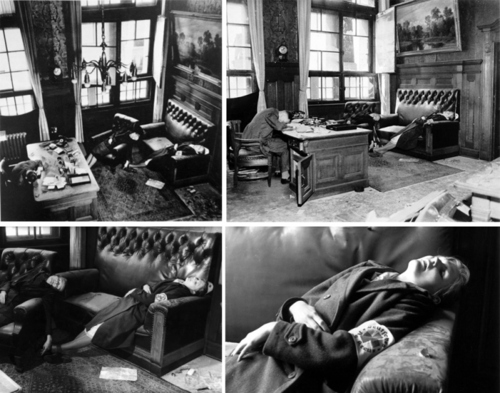
One of only two women combat photographers during World War II, she was also one of the few female correspondents who ventured into the liberated concentration camps. Her images of emaciated survivors and badly beaten Nazi guards rescued from the hands of their former victims by Allied troops — along with others of Nazi families who committed suicide as the Allies advanced — retain their devastating power to this day. 
Now her reputation as one of the most extraordinary photographers of the 20th century seems set to grow even further.The first thing you notice about the photograph is the astonishing beauty of the woman posing naked in the bathtub, then your eye is drawn to a far more sinister detail. Next to the soap dish is a portrait of the man whose bathroom she has appropriated: Adolf Hitler. Snapped at the Fuhrer’s abandoned apartment in Munich on April 30, 1945, the day he committed suicide in Berlin, this photographic scoop was every bit as daring and unconventional as the woman in the tub herself — fashion model turned war correspondent Lee Miller. Lee Miller in a bathing costume, posing for her lover, the photographer Man Ray In solo poses for her father, Lee lies with her back arched over the bed, or with her legs up against the wall. All of which leads Burke to wonder what went through Man Ray’s head as he watched the two of them together.Was there some significance in the poses of father and daughter taken by Man Ray and on show in the current exhibition. In these, sitting on her father’s lap and with her arms around his neck, Lee ‘nestles on his shoulder, gazes tenderly at him, and rests her head on his as if she felt utterly safe,’ writes Burke. So why did a woman who had established herself as one of the most creative and free-spirited female icons of her age hang up her camera and abandon it all for the life of a country housewife, spending much of her time, according to her son, ‘in a state of depression and alcohol abuse’?

This decline is usually attributed to her suffering undiagnosed post-traumatic stress disorder, and the horrors she witnessed in the war were certainly enough to haunt anyone.
Only hours before that iconic image in Hitler’s bathroom was taken by her wartime lover David Scherman, a photographer for Life magazine, she had worn the heavy army boots pictured next to the bath while capturing the horrors at Dachau.But it’s another photograph of Miller, again sitting naked in a bathtub, that may help explain her desolation in later life.  This image was captured in 1930, when she was 23, and the man behind the lens — as he was for numerous other nude studies of her over the years — was her father, Theodore Miller. Described by one colleague as ‘an American free spirit wrapped in the body of a Greek goddess’, the legendary beauty once had the mould for a new design of champagne glass taken from her breast; she seduced dozens of men, including Charlie Chaplin and Pablo Picasso — but she was no dumb blonde.
Miller wearing a Chanel outfit for a modelling assignment, circa Circa July 1928 That summer, Picasso painted six portraits of Lee, including one in which she had a third eye, positioned between her legs, an anatomical inaccuracy that belied their intimacy that summer. She later discovered that Roland had bought one of the portraits and was displaying it proudly on his mantelpiece in North London. When she finally left her Egyptian husband and moved in with Penrose months before the war began, it was clear she was keener than ever to put her days as a sex object firmly  behind her. As images of her steal the show at the National Portrait Gallery’s new exhibition devoted to Man Ray — the Surrealist photographer and artist whose lover and muse she was for three years — her son, Antony Penrose, has announced the discovery of thousands of her hitherto unseen negatives at the family farmhouse in Sussex where — as Lady Penrose — she lived until her death from cancer in 1977. Available online from the end of next month, and including shots of the liberation of Paris in 1944, they will give fascinating new insights into her career. But they are unlikely to explain one of the great mysteries of her life. 
The pictures of her in Hitler’s bathroom might suggest otherwise but they are part of a series in which she and David Scherman took turns to be photographed in the tub and, armed with the somewhat unlikely accreditation of ‘war correspondent for Vogue’,
she was always determined to compete on equal terms with men. This sometimes led her into  trouble. Shortly after D-Day, she broke a rule against female correspondents going anywhere near the frontline, and followed Allied soldiers as they made their final assault on the Germans in the French town of St Malo.For this, she was briefly arrested by the U.S. Army but, despite such experiences, the  war seems to have found her at her most fulfilled.Civilian photography could never have the same appeal. In 1949, when she and Roland moved to a farm house in Sussex, following their marriage two years earlier, Lee Miller put her photos in the attic and hardly ever talked about the war.  Nonetheless, it’s likely she missed not just the adrenaline and the camaraderie but, perhaps most important, the respect of soldiers and male colleagues. Lee Miller (right) with art critic Frederick Laws (left) at a theatre performance in 1950. In her later years Miller suffered from depression.To the casual observer, indeed, they seem more like portraits of a young woman and her far older lover than of father and daughter.What point Man Ray was trying to make with the pictures is open to question, but Theodore’s naked photo  sessions with Lee are certainly all the more disturbing for the circumstances in which they began.
When Antony Penrose began writing a biography of his mother after her death, he discovered a secret that she had taken to her grave. To appreciate the importance of this, we have to remember that, as a little girl, she had learned to gain her father’s love and approval by removing her clothes for him.
At war, perhaps for the first time in her life, she was being appreciated not for what she looked like but what she could do. Adjusting to civilian life must have been a challenge indeed for the woman who always vowed she would ‘rather take a picture than be one’. Their closeness is illustrated in the new exhibition of work by Man Ray. The artist himself became so besotted with Miller that he insisted they be linked by a golden chain when they were out together — but he could not hope to compete with her father’s place in her affections.Father and daughter’s unsettling bond became clear when Theodore visited Lee and Man Ray in Paris in December 1930.During this time, according to Carolyn Burke, author of Lee Miller: A Life, ‘Theodore relished the opportunity to do as many nude studies as he could schedule’. These included shots of his daughter cavorting naked on her bed with stunning young female models hired specially for the occasion. Burke describes one photograph Theodore took of her with a woman called Tytia as stopping ‘just short of lesbian sex’. 
An engineer by training, he was the manager of a large factory in the upstate New York town of  Poughkeepsie and was said to have taken advantage of his position by fondling his female employees. Carolyn Burke suggests that he also had more substantial liaisons with other women and, when he did show an interest in his wife, it was to demand that she should pose naked for him in the name of art. It was shortly after his daughter’s rape that Theodore, then 43, began taking nude photographs of her, too. The first, posed two weeks short of her eighth birthday in April 1915, shows her standing in the snow outside their house, naked except for her slippers.

That this sudden interest in his daughter’s naked form should coincide with the attack on her naturally leads to suspicion, but Antony Penrose says he has found no evidence to suggest that Theodore was her rapist, or that there was any kind of incestuous relationship between them. Her brothers, Erik and John, revealed that in 1914, when Lee was seven, she was sent to stay with family friends near New York while her mother,  Florence, was ill in hospital. While there, she was raped and infected with gonorrhoea — apparently by a male friend or relative of the family she was staying with. Mysteriously, no action was taken against the perpetrator, presumably for fear of an ensuing scandal. This is perhaps understandable, but much harder to comprehend is her father’s behaviour at this time. ‘The way he photographed her was clearly a transgression of the usual parent-child boundaries,’ he says. ‘But although it wasn’t normal, I don’t think it was harmful.’ He suggests instead that these naked photographs were Theodore’s attempt to restore his daughter’s self-esteem. ‘I believe that it was his way of saying: “We know you have this horrible  disease but you are still a beautiful and clean person”. ’If so, it’s difficult to see why her father’s photographic ‘therapy’ should have extended to persuading several of her school-friends to strip for his camera, too. And despite the unbroken bond with Theodore, Lee later seems to have been uncomfortable about these shoots, particularly as she grew into an astoundingly beautiful woman.
Once, when she was 19, Theodore took her to some secluded countryside outside Poughkeepsie to pose as a woodland nymph.This was at around the time that Lee, who could never bring herself to discuss the rape with anyone, tried to confide the obliquest of references to it in her journal. This left her in tears and feeling ‘the nearest to suicide I have ever been’, and her turmoil is perhaps reflected in those pastoral photographs.
Lee Miller was a successful model in her earlier years‘Judging by the results, she felt uncomfortable,’ writes Carolyn Burke. ‘In some photos she covers her face with her hands. In others, she stands stiffly and shields her genitals.’Much of the rest of her life seems to have been an attempt to escape such scrutiny, although it may not have seemed so from her early career choices, working as an exotic dancer in the chorus of George White’s  Scandals, a New York revue performed in costumes stopping barely short of nudity, then as a lingerie model for a Fifth Avenue department store. The start of her modelling career for Vogue in 1927 was a twist on the same theme but, as she took increasing interest in the techniques of those photographing her, also marked the start of her ambition to become the observer rather than the observed. Her looks would certainly help her on her way. Her string of beaux in New York included Charlie Chaplin, who was 18 years her senior, and her ease in the company of much older men was further apparent when she travelled to Paris in 1929 and demanded that Man Ray should become her photography teacher. Then 39, he had 17 years on his new muse. And his obsession with photographing her as a series of isolated and surreal body parts — a headless torso or a pair of legs with a circus midget between them — can have done little to dispel her childhood sense of herself as a screen on to which others could project their fantasies. 
Neither can his enthusiasm for joining in the photographic sessions with her father on that visit to Paris in 1930 — sessions in which the two men photographed Lee reclining nude on a bed with three other naked women.

All the while, however, Lee was getting an invaluable training in photography from Man Ray. When she left him in 1932 and returned to New York, where she pursued an affair with Aziz Eloui Bey, an Egyptian aristocrat 16 years older than her, she became a sought-after portrait photographer.Even so, it would take another ten years, and the outbreak of war, before she really found her forte. By then she had married and then left Eloui Bey (though they did not divorce until 1947) and begun sleeping with wealthy English artist Roland Penrose who, unusually, was only seven years older than her. When they first paired up on holiday in France in the summer of 1937, he introduced her to Pablo Picasso and informed the great artist that he was free to share the favours of his new paramour, an offer that 57-year-old Picasso took up enthusiastically.